
If you’ve ever wondered whether Filipino and Tagalog are the same language, you’re not alone. This question pops up constantly in language forums, classrooms, and even among Filipinos themselves. The two words are used so interchangeably that many people assume they’re identical, while other people strongly insist they’re not the same.
The reality isn’t completely black and white, of course — and understanding that can help you appreciate how languages are standardized, and how national languages are chosen and cultivated.
The Quick Answer
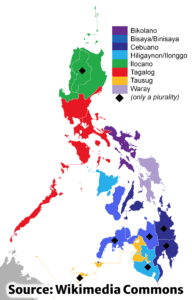
Filipino and Tagalog are closely related and in a certain sense they’re the same, but not exactly the same.
Tagalog is one of the Philippines’ many native languages, spoken mainly in parts of Luzon. Filipino is the national language of the Philippines — a standardized language that’s based on Tagalog but is intended to flexible and developed for use throughout the country.
In everyday life, they’re often so similar that most people treat them as the same language. But technically, there are differences in purpose, definition, and development.
What Exactly Is Tagalog?
Tagalog is an Au stronesian language originally spoken in central and southern Luzon, especially in areas like Metro Manila, Cavite, Bulacan, Laguna, Batangas, and Quezon Province.
There are distinct dialects of Tagalog, such as:
If you grew up in any of those regions, Tagalog is simply the everyday language you hear at home, on the street, and in local media.
Then What Is Filipino?
Filipino is the national language of the Philippines. It’s used in schools, government, TV, movies, and national communication. Filipino was designed to be a standard language that every Filipino could learn and understand, regardless of which region they came from.
In simple terms:
Filipino = a standardized, modernized version of Tagalog created to serve the whole country.
But this raises a bigger question — why is Filipino the national language, and why was it developed?
How Was Filipino Developed?
You don’t need to memorize dates to understand this part; the story is pretty straightforward.
1. Before the 1900s
The Philippines had — and still has — a huge variety of languages (close to 200). There was no single national language (though Spanish and later English served as official languages due to colonial rule).
2. 1935: A National Language Is Needed
The government decided the country needed a common native Filipino language to help unite people from different regions. Tagalog was eventually chosen as the foundation for the future national language.
Why Tagalog?
- It had the most published literature at the time
- It was already used in Manila, the capital
- It had a large number of speakers
3. 1950s–1980s: “Pilipino” Becomes the Standard
A standardized version of Tagalog was taught nationwide. This version was called Pilipino. It simplified the spelling system and became widely used across the country.
The standardized language was intended to be based on Tagalog, but with some vocabulary and grammar taken from other languages of the Philippines. The generous interpretation of this is that they intended to be fair and inclusive of all language communities, while the cynical interpretation is that Pilipino was simply repackaged Tagalog, and that other languages were never really intended to be a part of it.
My guess is that they originally intended for the language to grow and develop into a new language with more influence from different linguistic communities, but that it didn’t end up working out that way.
4. 1987: Pilipino is renamed Filipino
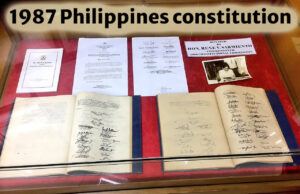 The modern national language, Filipino, replaced Pilipino in the Constitution.
As I understand it, this was intended to reflect the various influences on the national language – specifically the influence of Spanish. The original name of the Philippines was Las Filipinas, which was named after King Filipe II of Spain.
Also, languages of the Philippines generally don’t have a native /f/ sound – they replace it with /p/. But with the influence of English and Spanish on their languages, most Filipinos can easily say the /f/ sound now.
Changing its name to Filipino was another step in trying to shape the national language into something that isn’t just Tagalog.
So Are Filipino and Tagalog the Same?
This topic has been discussed and debated for decades, and there are three main viewpoints.
Viewpoint A: “Filipino and Tagalog are the same.”
People who believe this say:
- Filipino grammar is basically the same as Manila Tagalog
- Most Filipino vocabulary is the same as Tagalog vocabulary
- Filipino didn’t end up adopting many words from other Philippine languages
In day-to-day use, this is mostly true — even in media and government communication.
Viewpoint B: “They are not the same.”
Others argue that Filipino is different because:
- It is defined in the Constitution as a language meant to evolve
- It includes more modern loanwords (especially English)
- It is used nationwide, not just in areas where Tagalog is spoken natively
Viewpoint C: “Filipino started as Tagalog but is evolving”
Filipino began as standardized Tagalog, but it has the freedom to grow beyond it in the future.
For example, Filipino allows vocabulary from Cebuano, Ilocano, Kapampangan, and other Philippine languages. In practice, though, only a small amount of vocabulary has been adopted from them.
My opinion
I still see them as basically two varieties of the same language. Tagalog is a spoken language that is used in many ways by many people, some speaking more dialectally, some speaking in a more standardized way, some mixing more with English, and so on. Filipino is the standardized and more structured form of Tagalog that everyone learns at school, hears on the radio, and so on.
In my experience, Tagalog speakers usually refer to Filipino as “Tagalog”. And in my experience, people from non-Tagalog speaking regions do too. They don’t see Filipino as an inclusive national language that reflects all linguistic groups. But…
The Future
It’s possible that Filipino is gradually growing apart from Tagalog. Since it’s defined separately from Tagalog, there is nothing like a conservative Tagalog language academy trying to stop Filipino from changing. How it develops in the future depends on language and education policy, and also what happens culturally and socially.
Let’s say someday the capital city moves to Cebu. There’s no reason to think it will, but theoretically if it did, that might bring more direct Cebuano influence into Filipino. Or let’s say Ilocano pop music becomes the new K-pop and young people start throwing Ilocano words into their speech. That could bring more Iloco words into Filipino.
Or (and I’m about 50% joking here) Tagalog speakers from Metro Manila cease to exist because they turn into full-on TAGLISH speakers 😉. In that case, the keepers of Filipino, the people who speak it the way it’s taught, might be people from non-Tagalog regions. And then their native languages might start to have more of an impact on the national language.
These scenarios are all theoretical, but the main idea is that nothing is holding Filipino back from growing into something new, similar to the way that Indonesian has started to grow away from its roots as standardized variety of Malay. But so far I would say Filipino still standardized Tagalog.